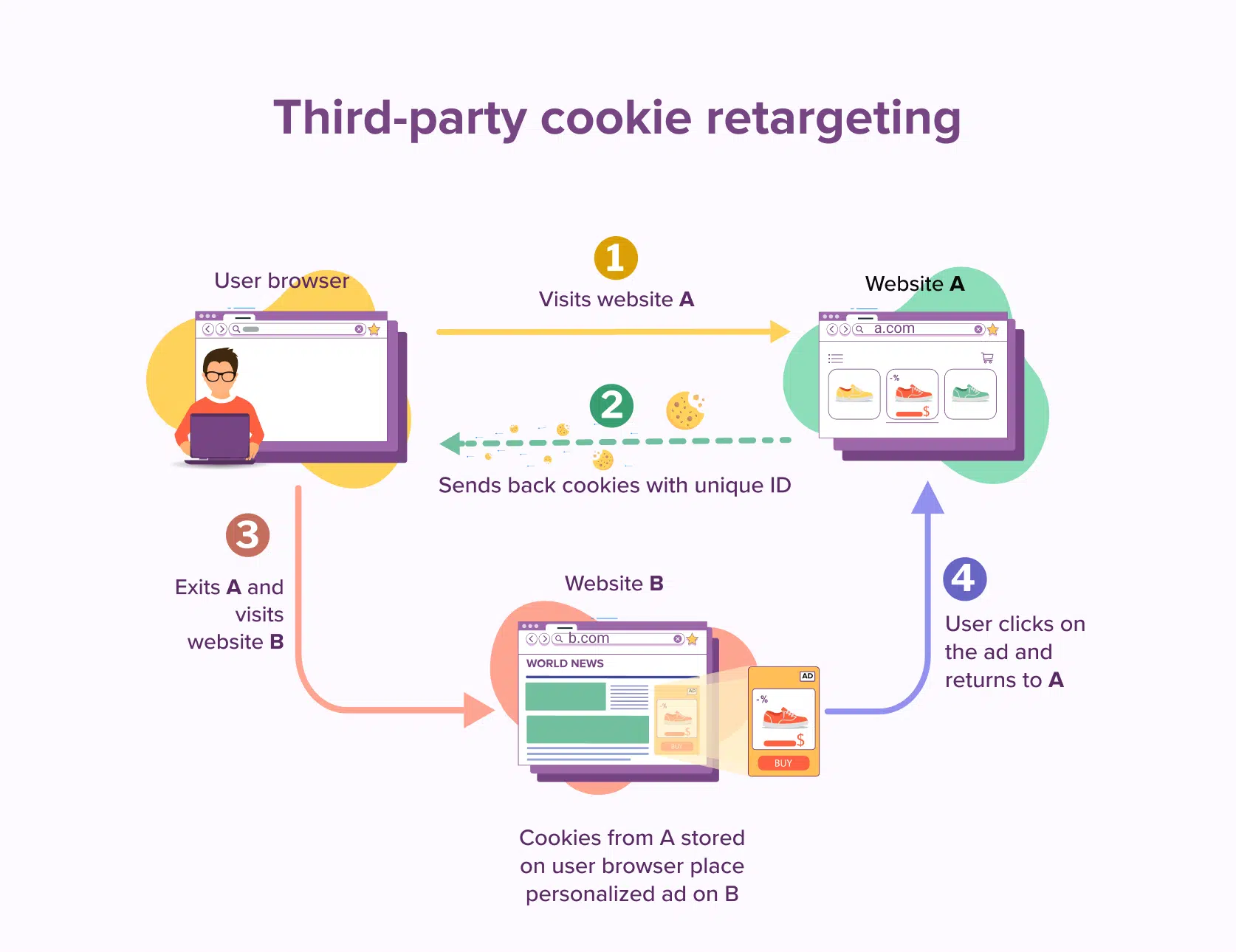
For more than two decades, third-party cookies powered much of the digital advertising industry. They allowed marketers to track users across websites, personalize advertisements, measure conversions, and optimize campaigns with extraordinary precision.
In 2026, that era is effectively ending.
Driven by growing privacy concerns, stricter regulations, browser restrictions, and changing consumer expectations, the digital marketing ecosystem is undergoing one of its biggest transformations in history.
The companies that adapt successfully will build stronger customer trust and more resilient data strategies. Those that fail to evolve may experience declining ad performance, rising acquisition costs, and reduced visibility into customer behavior.
The future of digital marketing is becoming increasingly privacy-first, AI-driven, and heavily dependent on direct customer relationships.

What Are Third-Party Cookies?
Third-party cookies are tracking files created by domains other than the website a user is directly visiting.
They have traditionally enabled advertisers and marketing platforms to:
- Track users across multiple websites
- Build behavioral advertising profiles
- Retarget customers with ads
- Measure ad performance
- Optimize audience targeting
These systems became foundational to modern digital advertising.
- Programmatic advertising
- Retargeting campaigns
- Multi-touch attribution
- Audience segmentation
- Personalized advertising
Why Third-Party Cookies Are Disappearing
1. Privacy Concerns
Consumers have become increasingly uncomfortable with extensive cross-site tracking and behavioral profiling.
Many users feel they lack transparency and control over how personal information is collected and used online.
2. Government Regulations
Privacy regulations worldwide have significantly tightened digital data collection practices.
- GDPR in Europe
- CCPA and CPRA in California
- Expanding privacy laws across Asia and Latin America
These frameworks require greater transparency, consent, and accountability around customer data usage.
3. Browser Restrictions
Major browsers have increasingly limited or blocked third-party cookies.
- Safari anti-tracking protections
- Firefox privacy controls
- Chrome’s transition toward privacy-focused advertising
4. Platform Ecosystem Changes
Technology companies are increasingly moving toward:
- First-party data strategies
- Consent-based tracking
- Aggregated analytics
- AI-driven measurement
The marketing industry is shifting from surveillance-based tracking toward privacy-focused customer engagement.

Why This Matters for Marketing ROI
Marketing ROI depends heavily on accurate measurement and targeting.
When third-party cookies disappear, marketers lose many traditional capabilities:
- Cross-site user tracking
- Detailed attribution visibility
- Behavioral retargeting
- Audience-level personalization
- Granular campaign measurement
Reduced Attribution Accuracy
Marketers can no longer track customer journeys as precisely across multiple websites and devices.
- Which ads drove conversions
- Which channels performed best
- Where budgets should be allocated
Attribution models are becoming less deterministic and more probabilistic.
Rising Customer Acquisition Costs
Without precise targeting, businesses may spend more money reaching less relevant audiences.
Customer acquisition costs are increasing across many industries as targeting efficiency declines.
Declining Retargeting Performance
Retargeting has historically been one of the highest-performing digital advertising strategies.
- E-commerce brands
- SaaS companies
- Subscription businesses
- Online retailers
As cross-site tracking weakens, retargeting audiences become smaller and less precise.
The Shift Toward First-Party Data
In the post-cookie era, first-party data has become one of the most valuable assets in digital marketing.
First-party data comes directly from customer interactions such as:
- Website interactions
- Email subscriptions
- Purchase history
- Loyalty programs
- Mobile apps
- Customer surveys
- Community engagement
Unlike third-party tracking, first-party data is:
- Consent-driven
- More accurate
- Privacy-compliant
- Owned by the business
The most valuable marketing asset in 2026 is customer data that businesses collect directly and transparently.

Why Email, Communities, and Owned Audiences Matter More
- Email newsletters
- Membership communities
- Customer loyalty programs
- Mobile applications
- Subscription ecosystems
- CRM infrastructure
Businesses are increasingly shifting:
- From rented audiences to owned audiences
- From short-term clicks to long-term relationships
- From tracking users to earning trust
AI Is Becoming Critical for Marketing Measurement
Artificial intelligence is helping marketers adapt to reduced tracking visibility.
- Predict conversion behavior
- Model customer journeys
- Analyze aggregated patterns
- Optimize campaigns automatically
- Generate audience insights
- Improve contextual targeting
Instead of tracking every individual user, AI increasingly relies on statistical modeling, predictive analytics, and aggregated data sets.
AI-powered marketing analytics are becoming essential in the privacy-first advertising ecosystem.
Contextual Advertising Is Returning
Before behavioral advertising dominated digital marketing, contextual advertising was widely used.
In 2026, contextual targeting is making a strong comeback.
- Website content
- Search intent
- Real-time engagement
- Content relevance
Examples:
- Fitness articles showing health products
- Business news sites displaying financial services ads
- Technology content promoting software tools
This approach avoids invasive tracking while maintaining advertising relevance.
The Rise of Retail Media Networks
Large retailers are increasingly becoming advertising platforms because they possess highly valuable first-party customer data.
- Amazon
- Walmart
- Target
- Carrefour
- Alibaba
Retail media networks are growing rapidly because:
- They rely on first-party data
- Purchase attribution is clearer
- Consumer intent signals are stronger
Challenges Businesses Still Face
- Reduced attribution precision
- Fragmented measurement systems
- Higher compliance requirements
- Data integration complexity
- Greater reliance on platform ecosystems
Small businesses may face additional challenges due to limited analytics infrastructure and smaller first-party data sets.
What Businesses Should Focus on in 2026
- First-party data collection
- Customer trust
- CRM development
- AI-powered analytics
- Omnichannel engagement
- Contextual advertising
- Community building
The future of marketing ROI depends less on surveillance-style tracking and more on relationship-driven engagement.

Final Thoughts
The death of third-party cookies represents one of the most significant transformations in digital marketing history.
While many marketers initially viewed the transition as a threat, it is also creating opportunities for businesses willing to evolve.
The future of marketing is becoming:
- More privacy-conscious
- More relationship-driven
- More AI-powered
- More dependent on first-party data
Businesses that prioritize transparency, customer trust, and direct audience relationships are likely to build stronger long-term marketing performance.
In 2026, marketing ROI is increasingly determined by customer trust, data ownership, and meaningful engagement.