For decades, the chief financial officer’s primary responsibilities centered on budgeting, compliance, reporting, and risk management.
In 2026, those responsibilities still matter—but the role has expanded dramatically.
Today’s finance leaders are expected to:
- Drive business strategy
- Predict market shifts
- Improve operational efficiency
- Accelerate decision-making
- Optimize capital allocation
- Lead enterprise-wide AI adoption
Modern CFOs are no longer just financial stewards. They are becoming AI operators.
By combining financial expertise with artificial intelligence, finance leaders are transforming how organizations forecast performance, manage risk, and create competitive advantage.
The question is no longer whether finance teams should adopt AI. The real question is: How quickly can finance leaders integrate AI into everyday operations?
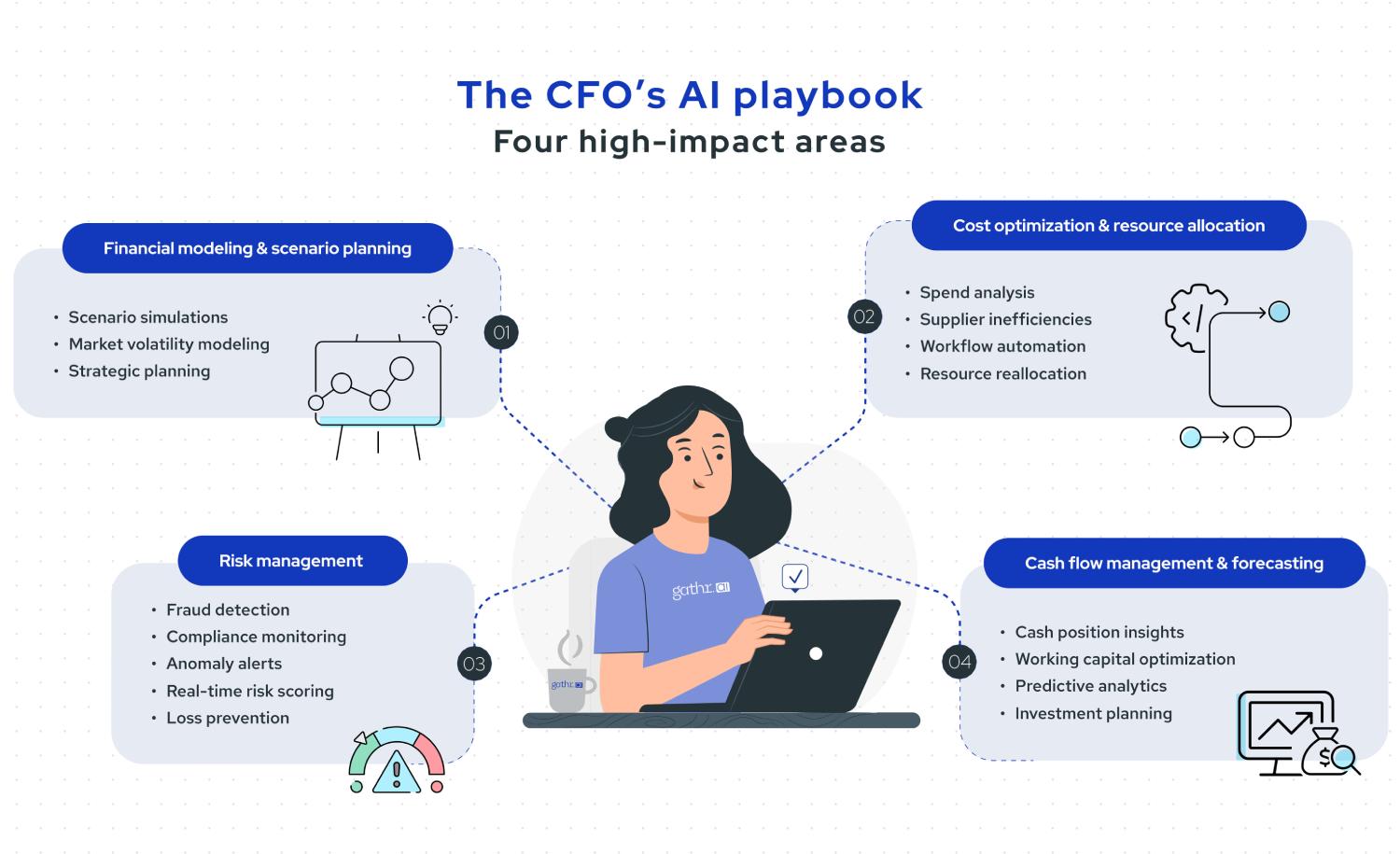
What Does “CFO-as-AI-Operator” Mean?
The CFO-as-AI-Operator model describes finance leaders who actively deploy AI across financial processes instead of treating it as a standalone technology initiative.
Rather than relying solely on historical reports, these leaders use AI to:
- Generate predictive insights
- Automate repetitive tasks
- Simulate business scenarios
- Detect anomalies in real time
- Improve financial visibility
In many organizations, CFOs now oversee:
- Data governance
- Financial intelligence platforms
- AI implementation frameworks
- Cross-functional analytics initiatives
Finance is becoming a strategic technology function.
Why AI Adoption in Finance Accelerated in 2026
Several factors have pushed CFOs toward AI adoption:
- Economic uncertainty
- Pressure to improve margins
- Increased reporting complexity
- Talent shortages
- Demand for real-time decision-making
At the same time, AI tools have become more accessible and easier to integrate.
Cloud platforms, embedded analytics, and generative AI capabilities have lowered implementation barriers for companies of all sizes.
As a result, finance teams can achieve more without significantly increasing headcount.
AI is helping finance teams scale intelligence faster than they scale headcount.

How CFOs Are Using AI Today
1. Predictive Forecasting
Traditional forecasting relied heavily on spreadsheets and historical trends.
AI enables finance teams to:
- Analyze large datasets
- Identify hidden patterns
- Update forecasts dynamically
- Run scenario simulations
This allows CFOs to answer questions such as:
- What happens if demand declines by 10%?
- How will inflation affect margins?
- Which business units need investment?
Forecasting is shifting from quarterly exercises to continuous planning.
2. Automated Financial Reporting
Manual reporting consumes significant time and resources.
AI-powered platforms can now:
- Consolidate data automatically
- Generate reports instantly
- Identify reporting inconsistencies
- Create executive summaries
This reduces reporting cycles from weeks to hours.
Finance professionals spend less time preparing reports and more time interpreting insights.
3. Cash Flow Optimization
Cash flow remains one of the most important metrics for any business.
AI helps finance leaders:
- Predict receivables delays
- Identify spending anomalies
- Optimize working capital
- Improve payment timing
Real-time visibility enables faster action and stronger financial resilience.

4. Risk Detection and Fraud Prevention
AI systems excel at detecting unusual patterns.
Finance teams use AI to monitor:
- Transaction anomalies
- Vendor fraud
- Compliance violations
- Cybersecurity threats
Machine learning models continuously improve by learning from historical data, helping organizations respond to risks earlier.
5. Accounts Payable and Receivable Automation
Routine financial operations are increasingly automated.
AI tools can:
- Process invoices
- Match payments
- Extract document data
- Route approvals
- Send payment reminders
Automation reduces errors while improving operational efficiency.
The future of finance is shifting from manual processing to intelligent orchestration.
The New Skills Every CFO Needs
Technology alone does not create transformation. Finance leaders must develop new capabilities.
Key skills include:
- Data literacy
- AI governance
- Strategic communication
- Change management
- Technology evaluation
The modern CFO does not need to become a data scientist. However, understanding how AI systems work—and where they can fail—is essential.

Building an AI-Ready Finance Team
Successful AI adoption requires more than software implementation.
Upskilling Teams
- Data analysis
- AI fundamentals
- Financial technology tools
Improving Data Quality
Poor data leads to poor outcomes.
- Standardized processes
- Strong governance frameworks
- Clean financial datasets
Starting with High-Impact Use Cases
- Forecasting
- Reporting
- Invoice processing
- Cash flow analysis
Early wins build confidence across the organization.
Common Mistakes Finance Leaders Make
Treating AI as a Technology Project
AI transformation requires leadership involvement and business alignment.
Ignoring Data Readiness
Advanced models cannot compensate for inconsistent data.
Automating Broken Processes
Inefficient workflows remain inefficient after automation.
Overlooking Human Oversight
AI should augment financial expertise—not replace it. Human judgment remains essential.
The most effective finance organizations combine AI capabilities with human expertise.

The Human Element Still Matters
Despite rapid technological advancement, the future of finance remains deeply human.
AI can provide:
- Insights
- Predictions
- Recommendations
But finance leaders still provide:
- Context
- Strategic thinking
- Ethical judgment
- Stakeholder trust
The future is not AI replacing finance leaders. It is finance leaders who effectively use AI outperforming those who do not.
What the Finance Function Will Look Like by 2030
- More automated
- More predictive
- More strategic
- More integrated across departments
Routine work will continue to decline while strategic work increases.
The CFO’s office will increasingly serve as the organization’s central intelligence hub.
Final Thoughts
The rise of the CFO-as-AI-Operator represents one of the biggest shifts in modern business leadership.
Finance leaders are evolving from scorekeepers into strategic operators who use AI to drive growth, resilience, and innovation.
Organizations that embrace this transition early will gain advantages in:
- Speed
- Efficiency
- Forecast accuracy
- Risk management
In 2026, the most effective CFOs are not asking whether to adopt AI. They are asking:
Which financial decisions can AI help us make better, faster, and more confidently?